Thursday, 15 January 2009

ASA


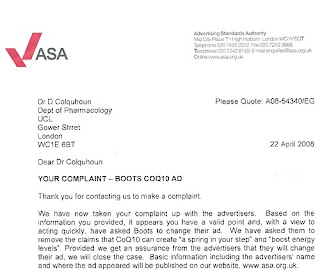
The ASA (Advertising Standards Authority) is the independent body set up by the advertising industry to police the rules laid down in the advertising codes. The strength of the self-regulatory system lies in both the independence of the ASA and the support and commitment of the advertising industry, through the committee of advertising practice (CAP), to the standards of the codes, protecting consumers and creating a level playing field for advertisers.


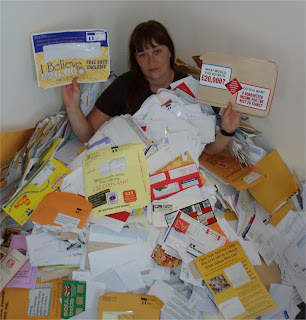
ASA can stop misleading, harmful or offensive advertising. ASA can ensure sales promotions are run fairly. They can help reduce unwanted commercial mail, either sent through by the post, by e-mail or text message, and can resolve problems with mail order purchases.


The ASA investigates complaints made about adverts, sales promotions or direct marketing. Anyone has the right to complain to the ASA. Most complaints are made through the complaints form on their website. ASA publish their adjudications on complaints on their website every wednesday.


ASA research into many areas to help with their work, including research into people's attitudes towards advertising and compliance with the advertising standards codes within specific sectors and media.


The Advertising standard codes are separated out into codes for TV, radio and all other types of ads. There are also rules for teletext ads, interactive ads and the scheduling of television ads. The main principles of the advertising standards codes are that ads should not mislead, cause harm, or offend.


Wednesday, 14 January 2009

BBC organisation + Copyright and creative commons.

The BBC (British broadcasting company) is the largest broadcasting corporation in the world. It's mission is to enrich peoples lives with programmes that inform, educate and entertain. It is a public service broadcaster, established by a Royal Charter and funded by the license fee that is paid by UK households. 


The BBC uses income from the license to provide services including 8 national TV channels plus regional programming, 10 national radio stations, 40 local radio stations and an extensive bbc.co.uk website. BBC world service broadcasts to the world on radio, on TV and online. Providing news and information in 32 languages. It is funded by a government grant, not from the license fee.


The BBC has a commercial arm, BBC Worldwide, which operates a range of businesses including selling programmes around the world and publishing books, DVD and merchandise. Its profits are returned to the BBC for investment in new programming and services. The BBC is governed by the BBC trust, which represents the interests of license fee payers and sets the overall strategy. The Trust's chariman is Sir Michael Lyons. The BBC's Executive board, chaired by the Director-General, Mark Thompson, manages the day-to-day operation of the corporation.


For the BBC's health and safety regulations click here

COPYRIGHT


The law governing copyright in the UK is the Copyright Design and Patents Act (CDPA)(1988) and amendments. It exists to protect the intellectual standing and economic rights of creators and publishers of literary, dramatic, artistic, musical, audiovisual and electronic works. As long as the work is original, copyright protection is automatic. In the UK where there is no registration or other procedures to follow, copyright exists whether or not it is asserted using the copyright symbol or otherwise. The copyright symbol was established by the universal copyright convention in 1952 and when used signifies that the work is copyright protected.

CREATIVE COMMONS


Creative commons is a nonprofit corporation dedicated to making it easier for people to share and build upon the work of others, consistent with the rules of copyright. Creative commons provides free licenses and other legal tools to mark the creative work with the freedom the creator wants it to carry, so others can share, remix, use commercially, or any combination thereof. 


Tuesday, 13 January 2009

BBFC

The BBFC is the British Board of Film classification. It's main responsibility is to control the age restrictions for film within the United Kingdom.

There are currently 8 Classifications under the BBFC


Uc and U - a film classified as U or Uc is suitable for all, however a Uc is mainly targeted towards young children. Themes are usually quite sensitive, allows infrequent mild language, occasionally natural nudity but no sexual content. mild sexual behavior is acceptable e.g. kissing, mild violence only. Horror effects should be mild and brief. No reference to illegal drugs or use of illegal drugs.


PG - Parental Guidance, which means parents should watch the material beforehand and decided whether the content is suitable for their child. can have mild bad language only, natural nudity, mild sex references, moderate violence without detail, no glamorisation of realistic or easily accessible weapons. frightening sequences may not be prolonged or intense. Any drug references must carry a suitable anti drug message.


12 and 12A - suitable for viewers aged 12 and over, 12A is a film classified as "12" but is allowed to be viewed within the cinema accompanied by an adult. A person must be 12 to purchase the film on DVD, 12A is used in cinema only. Mature themes acceptable but must be suitable for young teenagers, sexual content must be brief and discreet, sexual references may be implied to that should not go beyond what is suitable for them. violence must not dwell on detail, no emphasis on injuries or blood. horror can be sustained but moderate. Drugs should be infrequent and not glamorised.


15 - is suitable only for people over the age of 15. Can contain frequent strong language e.g. "fuck" but the strongest terms such as "Cunt" will only be acceptable when justified by content. This type of language cannot be continued and aggressive. Sexual content shown but without strong detail. violence may be strong but not dwell on the infliction of pain. strong threat and menace permitted. gory images are unlikely to be acceptable. Drugs can be show but must not promote or encourage drugs.


18 - suitable only for adults. strong frequent horror, strong frequent language, sex (soft) strong maintained threat. Drugs used.


R18 - for adults only, to be shown in specially licensed cinemas or sex shops, and to adults of no less then 18 years.  


Monday, 12 January 2009

Ofcom

Office of communications, or as it is more commonly known (ofcom) is the independent regulator and competition authority for the communication industries within the United Kingdom. Ofcom was created by the communications act 2002 and was formed on the 29th of December 2003. Ofcom took responsibilities of five previous regulatory bodies.

These previous 5 bodies that made ofcom were;


Some of the main responsibilities of Ofcom are licensing, undertaking research, creating codes and policies. They also address complaints and look into competition. 

Part of Ofcom's duty is to examine complaints made by viewers or listeners. When Ofcom receive a copy of the programme they check the material to see if it breaches The Broadcasting Code. Ofcom will ask for a response from the broadcaster to the complain. Then Ofcom will deem the situation "resolved" or take further action.


Ofcom considers consultations to be a vital way of helping it to make the right decisions based upon the right evidence. Ofcom's formal process of consultation starts with document being published (which can be found on their website) asking for views and responses.


Ofcom is responsible for the management, regulation,  assignment and licensing of the UK's Electromagnetic spectrum. It Licenses for TV, radio, Mobile phone transmissions and private communications networks.  The Process of Licensing varies on the type of usage required, some licenses may simply have to be applied and paid for. Most of the procedures in place are taken for the previous 5 regulators, but Ofcom may change these procedures within  the future.

One recent issue regarding the "Russell Brand show prank telephone calls row" had to undergo regulation from Ofcom. The Show gained many complaints and was resolved by Russell Brand being suspended completely  from the BBC and Jonathan Ross suffering a 3 month suspension.

However Journalist such as Jim Black Criticised Ofcom, citing what he sees as its pandering to conformity:

"simply dispensing rules and regulations from on high, coercing and threatening people into line, makes things worse. being told how to behave is different from knowing how to behave. Indeed, it is precisely the experience of stifling conformism promoted by outfits like Ofcom that can lead to the comic tourettes offered by the likes of Ross and Brand.

Sunday, 11 January 2009

six jobs i am interested in within the media.

RUNNER

The role of Runner is the accepted and conventional entry-level position within the film production industry - the first rung on the ladder

As the role's name suggests, Runners first and foremost run errands.  Their responsibilities vary widely from shoot to shoot, but usually involve conveying messages, organising props, looking after cast and crew (making and distributing tea and coffee can be an hourly task), driving, delivering technical equipment, and attending to specific requests from the Producer, Director or Assistant Directors.

Runner

The role of the runner is the entry level position within the film industry.

Runners first and foremost run errands

Their responsibilities vary widely from shoot to shoot

Can involve:

Conveying messages

Organising props

Looking after cast and crew

Tea and coffee

Delivering technical equipment

RESEARCHER

The key skills needed for this job are initiative, the ability to listen to people and build up trust and rapport with them. You also need to remain impartial and non-judgemental, have the ability to plan and juggle work, have writing skills, a curiosity about life and people, and be able to network.

He has to check out information, ensuring everything is factually correct, initiate ideas and explore them, consider different angles on stories, contribute to the website, interview contributors, edit interviews and work within a team. 'The overall responsibility for the programme is with the producer, as soon as the programme goes on air, your responsibility stops as a researcher. The more skilled and experienced you are as a researcher, the more responsibility you will get.'

Researcher

Key skills:

Initiative

Ability to listen to people

Writing skills

Check out information

Ensuring everything is factually correct

Initiate ideas and explore them

Contributor contacts, time scheduling availability.

EDITOR

The film or videotape editor works in the post-production editing suite putting together, as a sequence, the final product, which consists of related shots from the raw camera footage. Working closely with the director to meet his or her requirements it is the skill of the editor that determines the quality and delivery of the final product.

Editor

Post production team

Sequencing raw camera footage together to create the final product

The relationship between the director and editor determines the quality and delivery of the final product

DIRECTOR OF PHOTOGRAPHY

DoPs work closely with the Director and Production Designer to give a film its visual signature. Lighting is one of the fundamental elements in filmmaking; the way in which light falls on an actor's face, reveals an interior space, or illuminates a landscape, can create mood, drama and excitement for the audience. The ability of cinema to entertain and emotionally move an audience is the result of a highly collaborative process which encompasses performance, editing and music. The role of the Director of Photography or Cinematographer is to provide a film with its unique visual identity, or look.

Director Of Photography

Works closely with director

Give a film its visual signature

Lighting

Creating moods

Entertain and emotionally move audience

SCREENWRITER

Screenwriters are authors who write the screenplays from which movies and television dramas are made.

Screenwriters create fresh ideas and bring stories to life in scripts for productions like feature films, TV comedy and drama, animation, children's programmes and computer games.

As a screenwriter, you might develop your own original ideas and sell ('pitch') them to producers. Alternatively, producers may commission you to create a screenplay from an idea or true story, or to adapt an existing novel, play or comic book.

Screenwriter

Your work would typically involve:

  • coming up with themes and ideas
  • researching background material 
  • developing believable plots and characters
  • laying out the screenplay to an agreed format
  • preparing short summaries of your ideas and 'pitching' them to producers or development executives
  • submitting the ‘first draft’ of your work 
  • getting feedback about your work from producers or script editors
  • rewriting the script if necessary (you may need to do this several times before arriving at the final agreed version).

CAMERA ASSISTANT

Camera Assistants support senior members of the Camera department, and undergo an important practical apprenticeship. Camera Trainees provide general support to the Camera department, while more senior Assistants carry out precise and complex technical tasks such as swinging camera cranes. Assistants learn crucial practical skills, which eventually help them to progress to more senior roles, such as Camera Operator and eventually Camera Supervisor.

Camera Trainees offer general support to the Studio/Outside Broadcast (OB) Camera department, carrying out simple tasks such as collecting equipment from stores, and assisting with rigging cameras and equipment. Camera Assistants offer general support to the Camera Operator, by rigging (setting up) cameras and accessories, and assisting with camera operation in any way required. They help to move cameras, 'bash' (handle and store) cables, and swing camera cranes.

Camera Assistant

Support senior members of camera department

Undergo practical apprenticeship

General support to camera department

Assisting with rigging and equipment

Assisting with camera operation in any way

Monday, 1 December 2008

London Trip

Today we went to London to visit two places of interest; The London Movieum, and also to visit a live studio and watch a live performance of the comedy show "Not going out" accompanied by the hilarious comedian - Alun Cochrane. The Movieum is a place in London that contains many props, scripts and interactive games in relation to film, also with a tour guide and some dressed up characters performing around the building.


The Movieum was an exciting experience, and we were given a chance to explore the place ourselves. It had everything from a decapitated head prop from "Shaun of the dead" to a gallery of the "Mr. Men" cartoon. Along with clothing and gadgets from "James bond", and robot props from "Dr. Who", along with many other things, made it an interesting experience.


We then had some time to kill before we had to gather on the coach to go to the studio, so we had a quick look at Big Ben and the London eye and head off into city to have a browse, but mainly to get some food because we were all starving. Most of the restaurants were packed with people, along with the streets, and took us some time to find anywhere with a free table, but in the end we managed to get a pizza and something to drink.


Then we went onto the coach again to the television studio, to watch the BBC three comedy; Not going out. This was a good chance to get a behind the scenes look at how a TV programme really works. First thing i noticed was three different sets where scenes are filmed, any scenes that needed to be filmed outside of these sets were pre-recorded before the show. There was also a mass of microphones attached to a crane above, thier purpose was to record the laughter of the crowd. For the show we had to laugh when appropriate. also the sets were surrounded by three or four cameras with a camera operator, and boom operators also.


When charachters clothing or a set had to be altered, we would go to an interval where comedian Alun Cochrane would entertain us. I found Alun hillarious and thought it was a good way to keep the audience amused for the intervals. obviously he was hired specifically for the intervals, and is not a neccassity for the programme, but was a great addition and kept audiences from becoming bored. This made me think more about how budgets work for television companies, as things have to be paid for, that arent always in the forefront of your mind, when thinking about television shows.

I shall leave you with some pictures from the day out.


Friday, 14 November 2008

Day 11-14 - Pitch,ian downs interview,more research and Tom cholmondeley interview
Day 11 - On day 11 we, as a group, pitched our idea for our radio programme. Our idea had to be pitched professionally, in front of four teachers in the role of producer/associate producers. They would make the decision, based on our pitch, to allow us to go ahead and make the programme, or to go back to the drawing board.
.
We pitched our idea; which was a christmas radio programme called "Will the recession make it the worst christmas in 30 years?" using a survey as primary research, asking people whether they thought christmas was too commercial, with three answers to tick, yes, no or not sure. which the results fitted similarily with our secondary research, which was an internet poll based on 607 votes. We also used a graph showing the GDP growth and loss of the UK within the last 18 years, visually presenting the first negative GDP fall since 1990.

This was all backed up with scripts and cue cards, and the use of a powerpoint presentation, covering the budget, role allocations, research on our topic, structure plan and various other key elements to our pitch. At the end of the pitch we also answered a series of questions which we answered. At the end of the pitch our project was given a "yes" from the acting panel, it felt very "Dragon's den".
Day 12 - On day 12 we had a radio presenter called Ian downs, who is curently freelancing, to come in and undertake an interview, to use within our roles and processes portfolio. We had prepared questions for him to answer referring to his line of work. His answers would be used in a 2 minute interview, which we would individually have to edit down as part or our roles and processes portfolio.

Day 13 - On day 13 we conducted some more research for our radio programme project, and agreed on hiring out the fostex and condenser mic on a Wednesday, to gather some vox pops and interviews within retail shops and the high street. This went as planned and we gained two interviews from people within retail, and 8 minutes of vox pops ready to be edited down. After this we still felt we needed more audio and plan to soon do this again and collect more material for our project.

Day 14 - On day 14 we conducted a second interview with a man called Tom cholmondeley, a Director for factual programmes such as "Horizon" he is currently creating his own independent prodution team, and again we had prepared questions for him, based on his line of work. We will use the interview and edit it down to two minutes, to assist the Ian downs interview, within our roles and processes portfolio.